
AI adoption is already happening inside your organization—and without the right understanding and context, it introduces real AI workforce risk.
Across every function, employees are experimenting with AI to move faster, automate tasks, and improve outcomes. This surge in AI adoption is happening ahead of formal AI governance, AI security, and AI enablement efforts, creating a widening gap between policy and practice. While the upside is clear, the reality is more complex: data exposure, over-reliance on outputs, shadow AI usage, and decision-making risks are quietly increasing—often without visibility.
Most organizations respond by introducing AI policies. It’s a necessary step. But policy alone doesn’t change behavior.
The Missing Layer in AI Adoption: HRM Operations
The organizations successfully navigating AI transformation aren’t just thinking about tools or governance—they’re operationalizing human risk.
Human Risk Management (HRM) operations sit at the center of this shift. They connect AI governance to real-world behavior, translating strategy into how people actually use AI in their day-to-day roles.
This isn’t awareness in the traditional sense. It’s not a course or a campaign. It’s a system.
Behind every effective HRM program is a structured operational model—built on core domains that define what needs to happen, and maturity dimensions that define how well it’s being done. These domains underpin how organizations scale cybersecurity culture, embed AI literacy, and manage AI workforce risk in a consistent, measurable way.
Start With Risk Intelligence: Where AI Workforce Risk Actually Lives
AI adoption doesn’t begin with policy or platforms. It begins with use.
People are already using AI across business functions—marketing teams generating content, legal teams summarizing documents, engineers debugging code, finance teams analyzing data. Each of these use cases introduces different levels of AI security risk and exposure.
This is where HRM operations must start: with risk intelligence.
In our model, risk intelligence is one of the core domains of a mature Human Risk Management program—focused on identifying, segmenting, and prioritizing human risk through baselines, vulnerability models, threat intelligence, and role-based risk profiling.
It’s also where AI enablement and future threat readiness come into view, alongside high-risk role frameworks and the data and measurement strategy that underpins everything. Tools in this domain give HRM practitioners a structured way to see what’s really happening so you can focus effort where it will have the most impact.
Rather than asking “Do we have an AI policy?”, the better question is: “How is AI actually being used across our organization?”
A jobs-to-be-done lens becomes critical here (popularized by Clayton Christensen in Competing Against Luck and his Harvard Business Review work on “Jobs to Be Done”). What are different segments of your workforce trying to do with AI? What specific business problems are people solving with AI? Where are they under pressure? Where are shortcuts being taken?
From there, organizations can begin to map and quantify risk:
- Where sensitive data is being shared
- Where outputs are trusted without validation
- Where unsanctioned tools are being used
- Where decision-making is being accelerated without oversight
This is the foundation of AI governance in practice—not theory.
HRM Ops as the Linchpin in AI Transformation
AI adoption is being driven by innovation teams, product teams, IT leaders and business units moving quickly to capture value. Meanwhile, governance and security functions are often reacting after the fact.
This is where HRM operations should play a critical role. They can sit inside the motion of change, not behind it. By embedding with AI enablement and transformation teams, HRM Ops can:
- Stay ahead of demand
- Understand emerging use cases early
- Identify human risk signals before they scale
- Influence behavior at the point of adoption
This shift—from reactive to embedded—is what separates mature programs from fragmented ones.
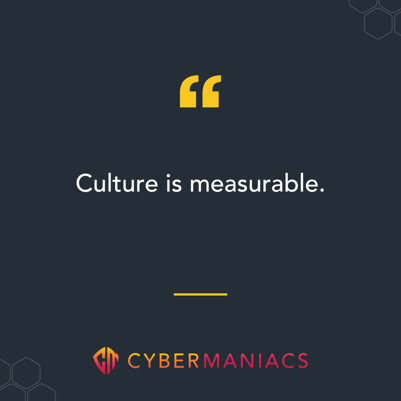
“Culture is what people do when no one is watching.”
In AI, that moment is every prompt, every output, every decision.
From AI Awareness to Cybersecurity Culture
AI awareness on its own is not enough. Most organizations have learned this the hard way with traditional cybersecurity awareness training.
Generic, one-size-fits-all content doesn’t reflect how people actually use AI. It doesn’t connect to their role, their pressures, or their decisions.
What works instead is building a cybersecurity culture around AI.
That means aligning AI literacy with:
- Organizational values
- Real business scenarios
- Role-specific risks
- Clear expectations of behavior
In our experience, this is where the science and creativity of human risk management come together. Behavioral science tells us that people act based on context, relevance, and reinforcement—not just information. Creative execution is what makes that context real.
This is how AI awareness becomes AI culture.
Measuring What Matters: AI Adoption, Behavior, and Risk
You can’t manage what you can’t see. One of the biggest challenges in AI workforce risk is visibility. Leaders often lack a clear view of how AI is actually being used, where the risks are emerging, and how behavior is evolving.
This is where mature HRM operations differentiate themselves.
They build feedback loops that go beyond completion metrics and into real signals:
- Awareness: Do people understand AI risks?
- Perception: Do they believe those risks apply to them?
- Behavior: Are they acting differently?
Segmentation also becomes critical. AI adoption is not uniform across an organization. Different roles, functions, and teams adopt AI at different speeds and in different ways.
Creating safe, anonymous channels for employees to share how they are using AI—what’s working, what’s unclear, and where they feel risk—is one of the most powerful tools available.
When combined with usage data, near misses, and incident patterns, this creates a rich picture of AI workforce risk in motion.
The Reality: This Is Hard to Do Well
Operationalizing AI governance, AI security, and human risk management at scale is hard—and most organizations feel it. Teams are juggling fragmented efforts, limited resources, and competing priorities while AI transformation accelerates around them, creating real pressure to respond quickly. That pressure often pushes programs into reactive mode: policies get written, training gets deployed, controls get added—but they don’t always connect to how people actually work, so the impact is uneven. The organizations that break out of this pattern take a different approach. They treat human risk as an operational discipline, build maturity deliberately over time, and focus on shaping behavior in context—so that governance, enablement, and everyday decisions move in the same direction.
Turning AI Strategy Into Real-World Behavior
AI transformation rarely fails in strategy decks—it falters in the moments where people make real decisions. The organizations that get this right don’t just define policies; they translate intent into everyday behavior, so people know what good looks like when it matters. That’s the work of HRM Operations: turning AI governance into practice, making AI literacy usable in context, and embedding a cybersecurity culture that holds up under pressure.
If you want to move this forward now, focus on three actions:
- Map real AI use: Identify where AI is already being used across roles and processes, and surface the decisions people are making under pressure.
- Make the “why” explicit: Connect AI policy to your mission and values with role-specific scenarios so people understand not just the rule, but the reason.
- Create a feedback loop: Combine anonymous employee input with usage signals, near misses, and incidents to see where behavior is shifting—and where it isn’t.
Do this well, and AI strategy stops being theoretical—it becomes how your organization actually operates. HRM Ops is how you make that shift, quickly and at scale.
TL;DR
AI adoption is accelerating—but without HRM operations, it introduces unmanaged AI workforce risk.
AI governance and AI policy are essential, but they don’t change behavior on their own.
Human Risk Management operations connect AI strategy to real-world behavior, embedding AI literacy, cybersecurity culture, and safe practices across the workforce.
Start with risk intelligence, embed with transformation teams, build culture, and measure behavior—not just compliance.
FAQ
What is AI workforce risk?
AI workforce risk refers to the risks created by how employees use AI tools in day-to-day work, including data exposure, incorrect outputs, over-reliance, and poor decision-making.
What is HRM Ops in AI adoption?
HRM Ops (Human Risk Management Operations) is the structured approach to managing how people adopt and use AI safely, connecting AI governance, AI enablement, and behavior change.
Why is AI governance not enough?
AI governance defines rules and controls, but without human behavior change and AI literacy, those controls are not effective in real-world use.
How does AI adoption impact cybersecurity culture?
AI adoption changes how employees make decisions. Without the right culture and awareness, this can increase risk. With the right approach, it strengthens cybersecurity culture and resilience.
What is AI literacy and why does it matter?
AI literacy is the ability to understand how AI works, its risks, and how to use it responsibly. It is essential for reducing AI workforce risk and enabling safe adoption.
How can organizations manage AI workforce risk effectively?
By using HRM Ops to map AI usage, identify risks, embed with transformation teams, create relevant content, and continuously measure awareness, perception, and behavior.
AI isn’t just a technology shift. It’s a behavioral one.
And the organizations that operationalize human risk will be the ones that get it right.